





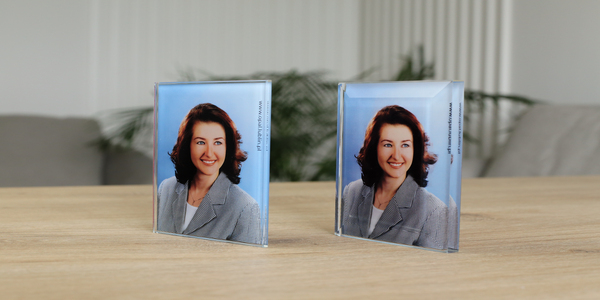
Photocrystal in stonemasonry: technical and aesthetic aspects
Contemporary stonemasonry combines tradition with modern technological solutions. One example of this combination is photocrystals, i.e. photographs preserved on glass, which are becoming increasingly popular as an elegant way to commemorate loved ones. Their aesthetics go hand in hand with durability, and a wide range of options – from the shape of the glass to the finish – allows them to be perfectly matched to the character of the monument.
In this article, we discuss the types of photo crystals, the differences in glass, and answer questions about their installation and visual effects.
ORDER A PHOTO FOR THE MONUMENT THROUGH THE ONLINE CREATOR

Types of photo crystals
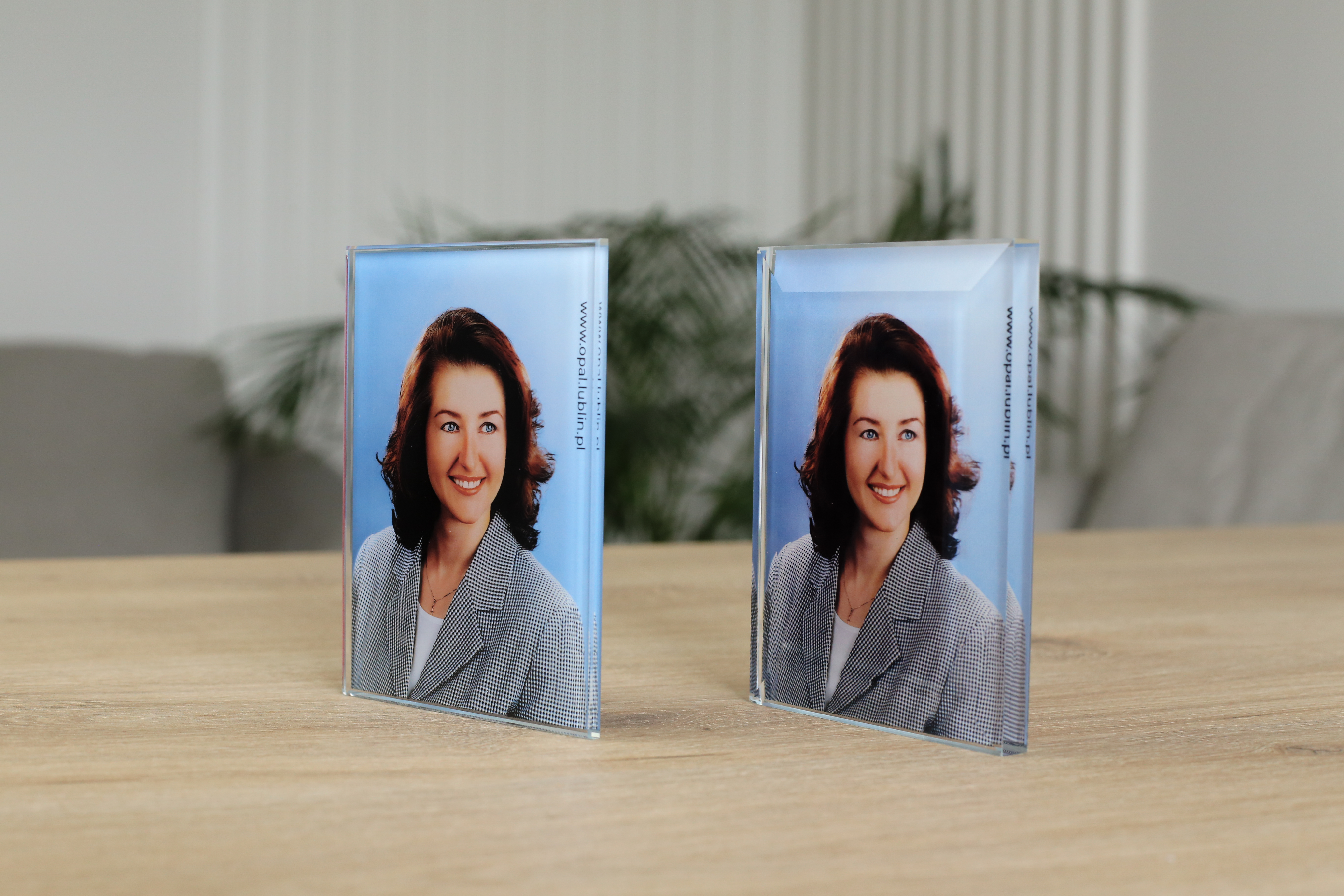
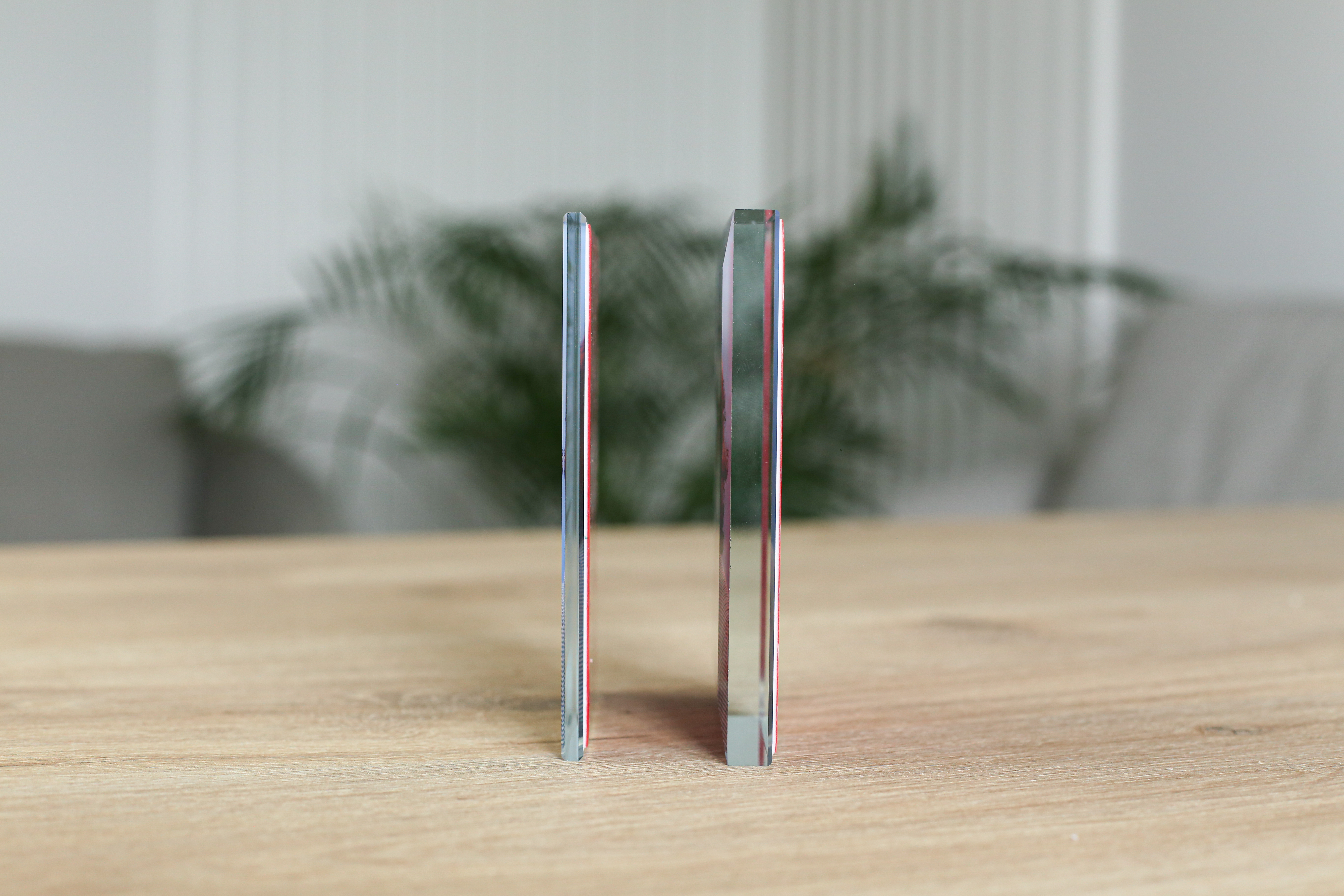
Photo crystals are available in various thicknesses and shapes, allowing them to be adapted to both modern and traditional gravestone designs.
Standard straight crystal (10 mm thick)
Standard straight photo crystals have polished edges and go well with any type of gravestone. Straight edges without a bevel give the monument a minimalist character and allow for an elegant presentation of the person in the photo.
Thin crystal (5 mm thick)
Thin photo crystals with a thickness of 5 mm are a light and subtle alternative to the classic versions. Thanks to their precise workmanship, they do not show through and allow for full, saturated colour reproduction. Their lower weight facilitates installation, which makes them well suited for gravestones with a delicate form or modern character.
Faceted crystal (12 mm thick)
The most impressive variant, distinguished by faceted edges that are finished with an elegant cut. As standard, the photo is placed over the entire surface of the crystal, but it is also possible to make a crystal with a transparent facet, which gives an interesting effect of depth and spaciousness.
CHECK OUT THE CRYSTAL OFFER
Green filter glass and OptiWhite glass – why does the choice matter?
The type of glass used has a significant impact on the final appearance of the photo crystal – both in terms of aesthetics and image reproduction quality.
Float glass is a classic type of glass produced using the float method, in which molten glass is spread over the surface of liquid tin. This technology produces two types of glass: standard float and OptiWhite. Both are produced in the same way, but differ in their chemical composition.
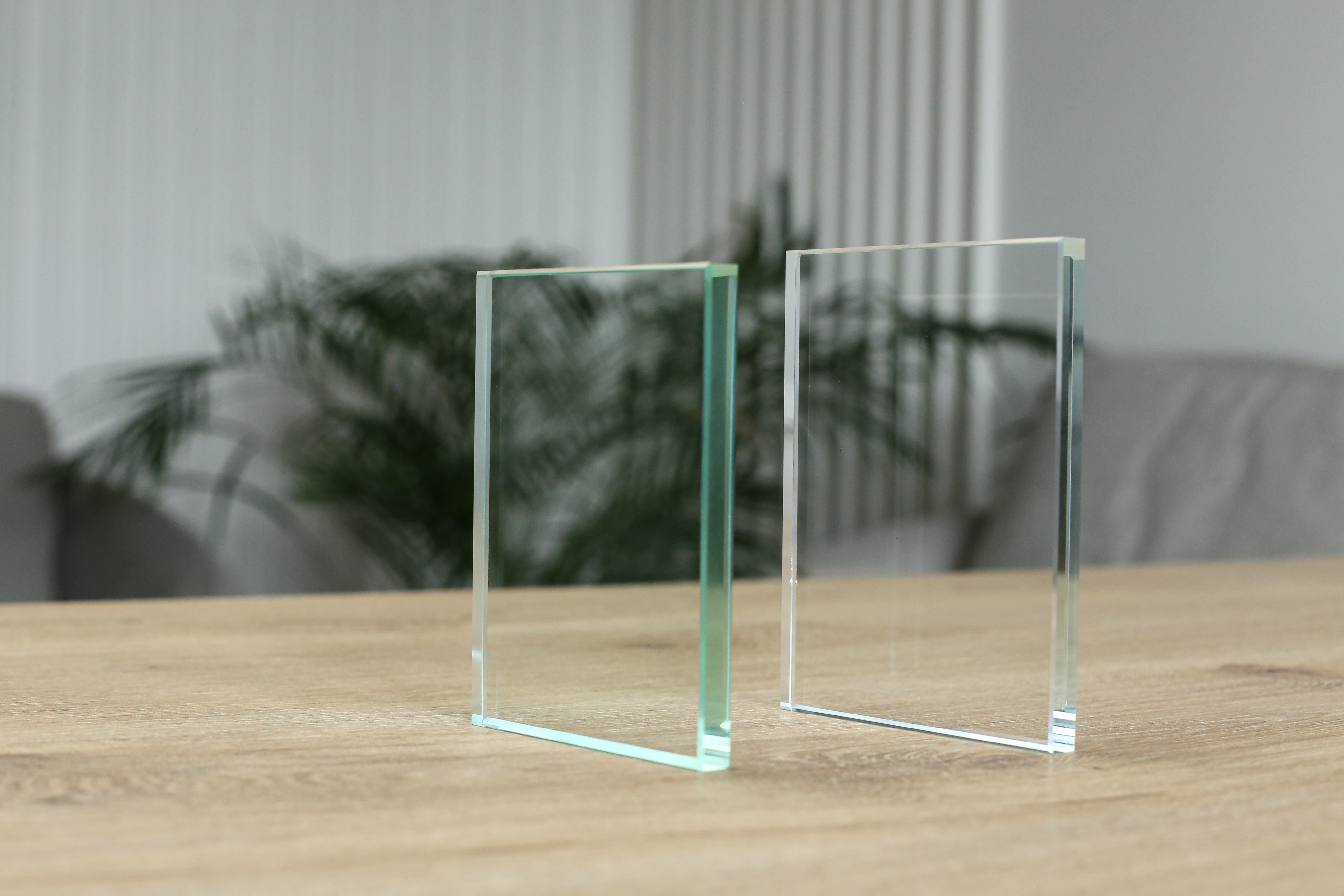
Standard float glass contains iron ions, which give it a delicate greenish tint, particularly visible at the edges.
To ensure the highest colour quality and transparency of photos in glass, Opal - Fotoceramika uses OptiWhite glass as standard. It is also float glass, but with a significantly reduced iron content, which eliminates the green filter. The pane is almost completely transparent and has a subtle, cool blue tint that does not interfere with the colour reproduction of the photograph.
It is this feature that makes the photographs look natural, clear and elegant.
Light refraction and bevelling on photovoltaic crystals
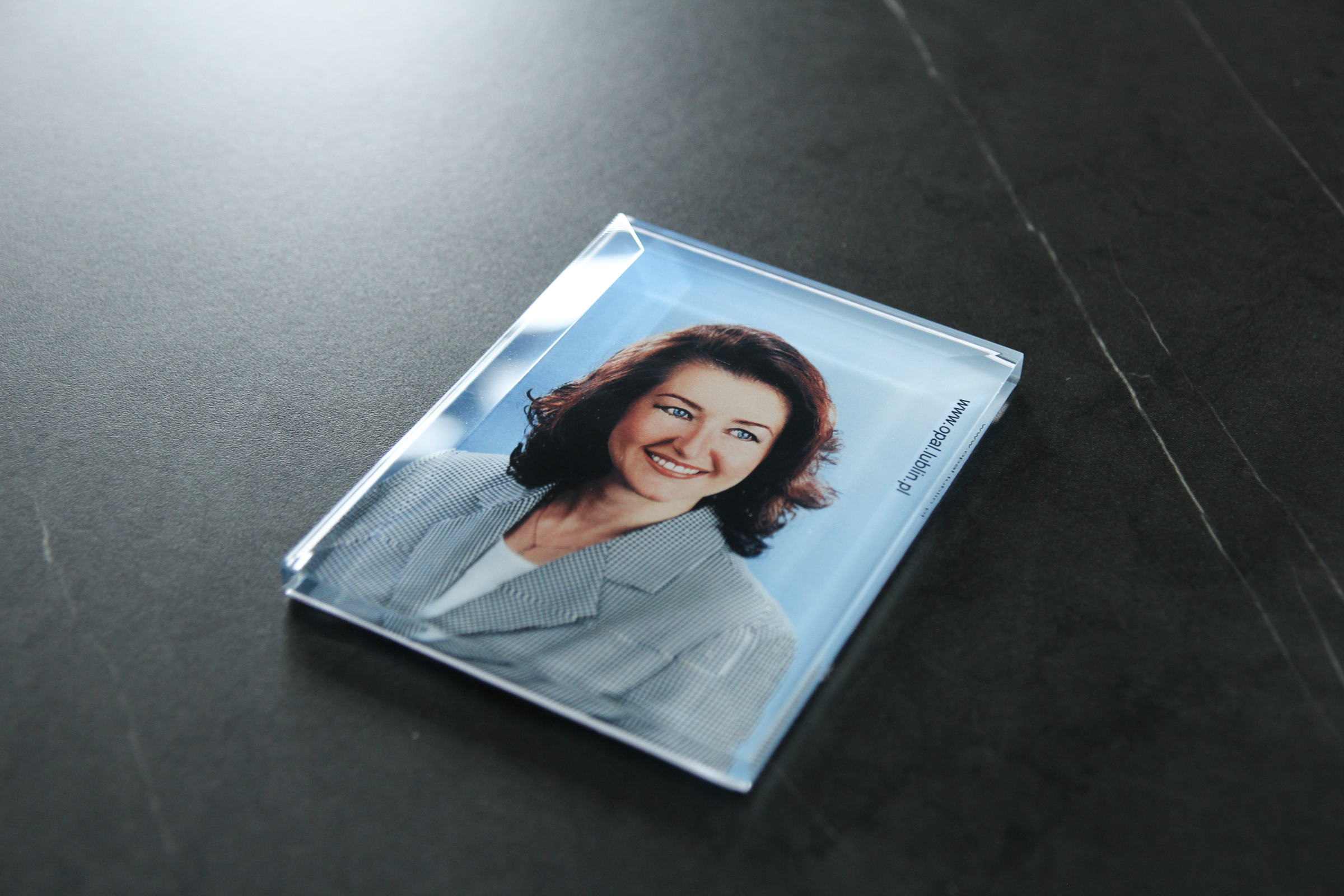
Bevelling is a decorative glass cutting technique in which the edges are gently cut at an angle to create a shiny, striking surface resembling a frame.
One of the situations reported by customers is the appearance of bright lines in photographs, particularly visible in full sunlight. This is not a defect, but the effect of light reflection and refraction on the glass surface. These reflections change their position depending on the angle of light and the time of day.
Installation and presentation of photo crystals
Installing a photo crystal on a gravestone requires the right technique and proper surface preparation. Thoroughly cleaning the installation site of dust and grease is key to ensuring that the photo crystal is permanently and securely attached. It is best to use a special cleaning and degreasing wipe to remove any residues, such as the silicone film left behind by some cleaning fluids.
As standard, photoceramics use 3M mounting tapes, which provide high resistance to all weather conditions. Bonding photocrystals with tape is a common practice among manufacturers. For individual customers, these elements are usually, but not always, factory-bonded, which significantly facilitates DIY installation.
In the case of advertising orders for stonemasonry companies, however, the crystals are delivered without mounting tape. In such cases, it is worth presenting the finished crystal on a white sheet of paper that imitates the effect of mounting tape. Its white surface is identical to the one we use on the inside – it enhances the colours and reproduces the final appearance of the photo in the glass that the customer will see after sticking it on.
ORDER A PHOTO FOR THE MONUMENT THROUGH THE ONLINE CREATOR
In this article, we discuss the types of photo crystals, the differences in glass, and answer questions about their installation and visual effects.
ORDER A PHOTO FOR THE MONUMENT THROUGH THE ONLINE CREATOR
Types of photo crystals
Photo crystals are available in various thicknesses and shapes, allowing them to be adapted to both modern and traditional gravestone designs.
Standard straight crystal (10 mm thick)
Standard straight photo crystals have polished edges and go well with any type of gravestone. Straight edges without a bevel give the monument a minimalist character and allow for an elegant presentation of the person in the photo.
Thin crystal (5 mm thick)
Thin photo crystals with a thickness of 5 mm are a light and subtle alternative to the classic versions. Thanks to their precise workmanship, they do not show through and allow for full, saturated colour reproduction. Their lower weight facilitates installation, which makes them well suited for gravestones with a delicate form or modern character.
Faceted crystal (12 mm thick)
The most impressive variant, distinguished by faceted edges that are finished with an elegant cut. As standard, the photo is placed over the entire surface of the crystal, but it is also possible to make a crystal with a transparent facet, which gives an interesting effect of depth and spaciousness.
CHECK OUT THE CRYSTAL OFFER
Green filter glass and OptiWhite glass – why does the choice matter?
The type of glass used has a significant impact on the final appearance of the photo crystal – both in terms of aesthetics and image reproduction quality.
Float glass is a classic type of glass produced using the float method, in which molten glass is spread over the surface of liquid tin. This technology produces two types of glass: standard float and OptiWhite. Both are produced in the same way, but differ in their chemical composition.
Standard float glass contains iron ions, which give it a delicate greenish tint, particularly visible at the edges.
To ensure the highest colour quality and transparency of photos in glass, Opal - Fotoceramika uses OptiWhite glass as standard. It is also float glass, but with a significantly reduced iron content, which eliminates the green filter. The pane is almost completely transparent and has a subtle, cool blue tint that does not interfere with the colour reproduction of the photograph.
It is this feature that makes the photographs look natural, clear and elegant.
Light refraction and bevelling on photovoltaic crystals
Bevelling is a decorative glass cutting technique in which the edges are gently cut at an angle to create a shiny, striking surface resembling a frame.
One of the situations reported by customers is the appearance of bright lines in photographs, particularly visible in full sunlight. This is not a defect, but the effect of light reflection and refraction on the glass surface. These reflections change their position depending on the angle of light and the time of day.
Installation and presentation of photo crystals
Installing a photo crystal on a gravestone requires the right technique and proper surface preparation. Thoroughly cleaning the installation site of dust and grease is key to ensuring that the photo crystal is permanently and securely attached. It is best to use a special cleaning and degreasing wipe to remove any residues, such as the silicone film left behind by some cleaning fluids.
As standard, photoceramics use 3M mounting tapes, which provide high resistance to all weather conditions. Bonding photocrystals with tape is a common practice among manufacturers. For individual customers, these elements are usually, but not always, factory-bonded, which significantly facilitates DIY installation.
In the case of advertising orders for stonemasonry companies, however, the crystals are delivered without mounting tape. In such cases, it is worth presenting the finished crystal on a white sheet of paper that imitates the effect of mounting tape. Its white surface is identical to the one we use on the inside – it enhances the colours and reproduces the final appearance of the photo in the glass that the customer will see after sticking it on.
ORDER A PHOTO FOR THE MONUMENT THROUGH THE ONLINE CREATOR